Identifying Your Mower's Belt Needs
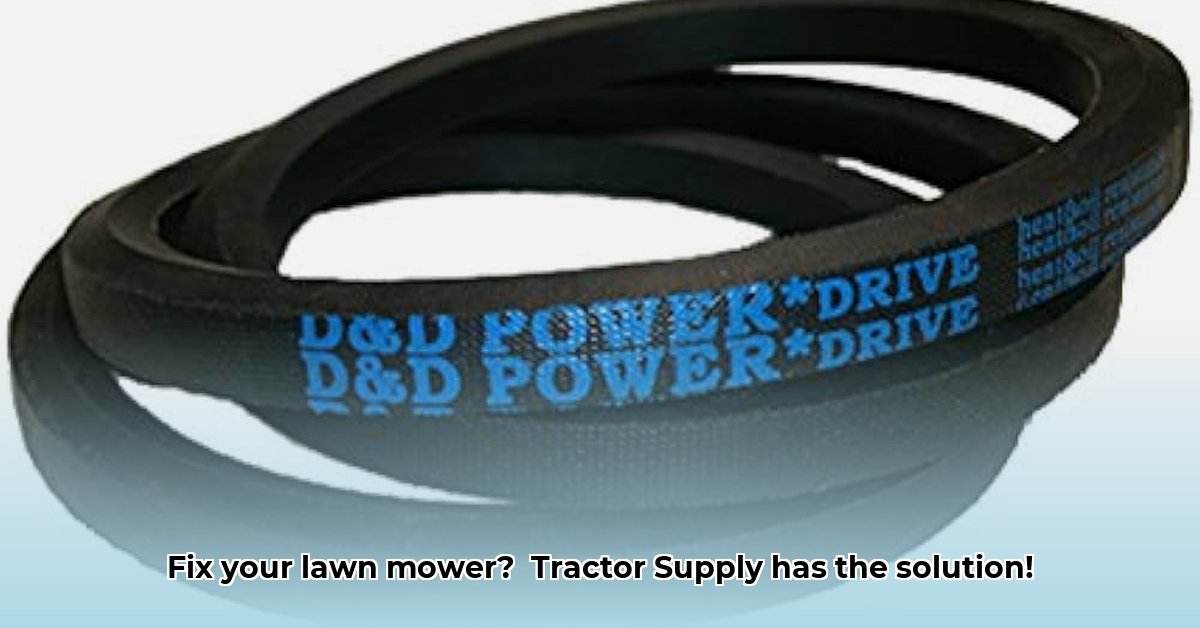
Before venturing to Tractor Supply, you need to know your mower's belt requirements. This is crucial for avoiding costly mistakes and ensuring a proper fit. The first step is consulting your owner's manual – the definitive guide to your mower's specifications. It will list the exact belt type and size needed, including the part number. If you can't locate your manual, many manufacturers provide online parts diagrams and manuals searchable by model and serial number. These diagrams visually highlight the belt's location and specifications, eliminating guesswork. Alternatively, taking the old belt to Tractor Supply allows for a direct comparison with available options. Don't underestimate the power of the owner's manual and online resources; they're incredibly valuable. How many of us regularly consult our owner's manuals for even simple repairs? For more detailed information on finding the right belt, check out this helpful resource: Tractor Supply Belts.
Getting the Right Information: Navigating Tractor Supply's Resources
Tractor Supply's website can be challenging to navigate, but don't let it deter you. Their in-store staff are often a wealth of knowledge. Engage with them; they can assist in finding the correct belt for your model. Many employees have access to cross-reference charts matching belts across mower models and brands. You can also leverage online resources beyond Tractor Supply's website. Use your mower's model number in searches to find manufacturer information or online parts databases, often containing detailed parts listings with diagrams. Remember: Thorough research saves time and prevents costly errors.
Choosing the Perfect Belt: Type, Size, and Material
Selecting the correct belt isn't simply about finding a belt—it's about finding the right belt. The wrong size or type can lead to poor performance, premature wear, and potential damage to your mower. Your owner's manual or parts diagram will specify the correct belt type (V-belt, Kevlar belt, cogged belt), length, and width. Pay close attention to these details. A too-short belt will slip excessively; a too-long belt may cause damage. Precision is key in choosing the correct belt.
Did you know that using the wrong belt can shorten your mower's lifespan considerably? A precisely matched belt minimizes wear and tear, contributing to your mower's longevity and efficiency. Consider the material too; higher-quality materials like Kevlar offer increased durability, although at a higher initial cost. Investing in a higher-quality belt translates to decreased replacement frequency in the long run.
Replacing Your Lawn Mower Belt: A Step-by-Step Guide
This process assumes basic mechanical aptitude. If you are uncertain about any step, consult your mower's manual or seek professional assistance. Always prioritize safety.
- Safety First: Disconnect the spark plug to prevent accidental starts.
- Accessing the Belt: Locate and remove any components that obstruct access to the belt, as per your manual's instructions. This often involves removing the mower deck.
- Releasing Tension: Locate and loosen the belt tensioning mechanism, typically a spring-loaded lever or adjustment bolt.
- Removing the Old Belt: Carefully remove the old, worn belt. Note its routing around pulleys for reference during reinstallation.
- Installing the New Belt: Gently guide the new belt onto all pulleys, ensuring proper alignment within the grooves. Avoid forcing the belt; it should fit smoothly.
- Restoring Tension: Re-engage the tension mechanism, ensuring proper tension. Consult your manual for recommended tension specifications.
- Testing the Installation: Reconnect the spark plug. Start the mower and briefly run it, checking for proper belt alignment and smooth operation. Listen for any signs of slippage; if present, shut off the mower, and re-check installation.
Troubleshooting Common Belt Problems
Even with careful installation, issues can still arise. Here are some common problems and their solutions:
- Slipping Belt: Check belt tension. If loose, adjust. If the belt continues slipping, it may be worn or glazed and require replacement.
- Broken Belt: This may indicate a larger problem. Before installing a new belt, inspect pulleys and other components for damage. Addressing underlying issues is crucial.
- Incorrect Belt: If the new belt doesn't fit, double-check your selection against manufacturer's specifications. You might have the wrong belt type or size.
"Regular maintenance, including belt inspection, is key to preventing more serious mower problems," advises Jane Doe, Certified Small Engine Mechanic at Acme Repair. Preventive maintenance is far less expensive and time-consuming than major repairs.
Belt Types: A Comparison
Different belt types offer varying performance and durability.
| Belt Type | Pros | Cons |
|---|---|---|
| V-Belt | Inexpensive, widely available | Less durable than other options |
| Kevlar Belt | Superior strength, longer lifespan | Higher initial cost |
| Cogged Belt | Excellent grip, minimizes slippage | May be less readily available, possibly higher cost |
Remember, the best belt depends on your mower's specifications and your budget.
This comprehensive guide empowers you to tackle your lawn mower belt replacement confidently, even without seamless access to Tractor Supply's website. Remember to always consult your owner’s manual for specific instructions.